0
min de leitura
July 22, 2026
Experiência do cliente em serviços financeiros: como tomar decisões melhores e mais rápidas

Bill Staikos
Você já consegue ouvir seus clientes. O fluxo de abertura de conta que era “longo e confuso demais”. O dono de pequena empresa que se irrita em ligar duas vezes por causa de um único pagamento. O titular do cartão que só queria uma taxa menor e foi jogado do site para um atendente sem nenhum contexto. Os signals estão por toda parte: registros de ligações, históricos de chat, categorias de reclamação, analytics de produto, avaliações do app, histórico de CRM, feedback do gerente de relacionamento. O problema nunca foi escutar. É decidir o que fazer com isso, rápido o bastante para importar.
Sem alarde, a experiência do cliente em serviços financeiros virou um teste de velocidade. Mais precisamente: com que rapidez você detecta uma mudança, decide o que importa, age com dono claro e prova que a ação funcionou. Errar na velocidade tem custo acumulado: o solicitante abandona, liga de novo, reclama ou leva o dinheiro para um concorrente antes de você terminar de formar uma opinião. Para cooperativas de crédito e bancos comunitários operando enxutos, e para bancos regionais e fintechs crescendo rápido, cada decisão lenta é paga em churn, volume de contatos e confiança corroída.
A maioria das instituições tem mais dado de cliente do que consegue usar
Cada time enxerga um pedaço do quadro. Atendimento vê os contatos subindo. Digital vê abandono. Produto vê uma funcionalidade quebrada. Operações vê um pico de retrabalho. Risco e compliance veem exceções e reclamações. Mas pouquíssimas pessoas conseguem ver o suficiente, rápido o suficiente, para decidir o que precisa mudar de verdade. O cliente, enquanto isso, vê uma instituição só, que não facilitou a interação. E cliente nenhum deveria ter que sentir o seu organograma.
É por isso que relatório sozinho quase nunca muda o resultado. Um dashboard mostra que as ligações subiram ou que a satisfação caiu. Sozinho, ele não estabelece a causa raiz, não identifica o segmento afetado, não dimensiona a consequência econômica, não define um dono e não confirma se a correção reduziu o problema. Customer intelligence em banco precisa fazer mais do que descrever o que aconteceu; precisa deixar a próxima decisão óbvia.
“Melhor” e “mais rápido” são coisas diferentes
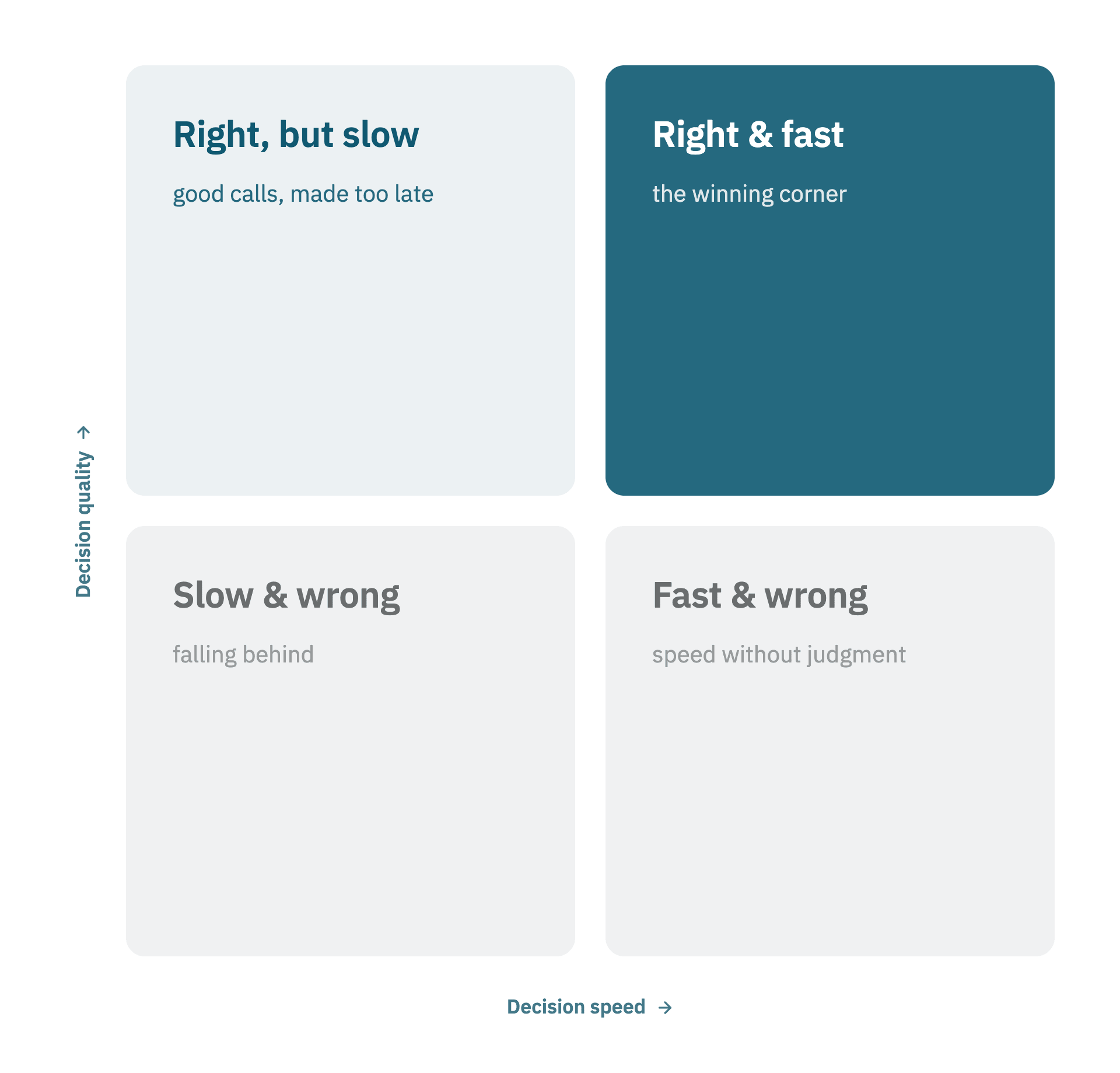
A maioria das instituições quer se mover mais rápido, e isso é razoável. Só que velocidade pode tornar uma boa decisão mais valiosa ou espalhar uma decisão ruim mais depressa. A diferença está em se as pessoas e os sistemas que decidem têm contexto suficiente para entender o que está acontecendo, quem é afetado e quais trade-offs estão em jogo.
O objetivo não é velocidade pura. É bom julgamento com rapidez. Uma instituição cuidadosa que chega à resposta certa tarde demais perde terreno do mesmo jeito: o cliente já abandonou a solicitação ou já tirou o dinheiro. Um banco ou uma fintech que decide rápido com informação incompleta gera retrabalho, exposição regulatória e desconfiança. Rápido e certo é o único canto que vale mirar; rápido ou certo é uma falsa escolha que, em silêncio, limita o quanto a sua experiência do cliente pode chegar a ser boa.
O problema real é contexto e velocidade
Quem lidera em serviços financeiros conhece bem o contexto fragmentado. Sistemas core, analytics digital, plataformas de contact center, CRM, ferramentas de pesquisa, programas de qualidade, sistemas de reclamação e relatórios operacionais vivem cada um no seu domínio. O dado existe; o difícil é ler tudo junto no exato momento em que a decisão precisa ser tomada.
Aí entra a velocidade. Uma mudança no comportamento do cliente é detectada tarde. Os times demoram para decidir se aquilo é relevante. A decisão se arrasta por reuniões recorrentes e repasses. O trabalho é atribuído, mas o critério de sucesso é vago. Quando alguém finalmente sabe se a intervenção ajudou, o cliente já ligou de novo, já abandonou o processo, já reduziu o uso do produto, já contou para um amigo ou já foi embora. Isso pesa mais justamente onde a confiança é mais difícil de conquistar: uma tarifa mal explicada, uma suspeita de fraude não resolvida, uma orientação de atendimento inconsistente ou uma falha no onboarding valem muito mais do que qualquer nota isolada sugere.
Saia da escuta e vá para um ciclo de decisão
A conversa de CX pendeu demais para o lado da escuta. Escutar continua importando, mas uma área de cliente moderna não pode terminar num relatório mensal, numa lista de temas ou num conjunto de achados para outros times “considerarem”. Ela precisa manter um entendimento compartilhado e atual da realidade do seu cliente, e transformar esse entendimento em decisão. Na prática, isso é um ciclo: signal, diagnóstico, ação, prova, aprendizado, ancorado em quatro perguntas:
- O que mudou?
- Por que isso importa agora?
- Quem é dono da resposta?
- Qual evidência vai mostrar que a resposta funcionou?
Para uma cooperativa de crédito, isso pode ser identificar exatamente por que os associados desistem no meio de um fluxo de crédito ou de abertura de conta digital, e se esse atrito está gerando ligações evitáveis. Para um banco comunitário ou regional, pode ser trazer à tona o problema operacional por trás dos recontatos de um segmento comercial valioso. Para uma fintech, pode ser separar um pico temporário de reclamações de um problema real de produto que vai atingir ativação, retenção ou confiança em escala. Em todos os casos o trabalho é o mesmo: conectar a linguagem do cliente, o comportamento, o dado operacional e o contexto de negócio; separar ruído de prioridade; deixar o dono explícito; e acompanhar o que de fato mudou depois que o trabalho foi entregue.
Governança e IA transparente não são opcionais num setor regulado
Palavras como “taxonomia” e “governança” soam técnicas, mas estão no centro do problema. Se atendimento, produto, operações e risco classificam o mesmo problema de formas diferentes, a liderança não enxerga o padrão real nem consegue comparar o que acontece entre produtos, canais e segmentos. Uma taxonomia de cliente consistente dá a todo mundo uma linguagem comum; a governança torna a informação confiável. Juntas, elas ligam o problema que o cliente descreve ao processo, à política, ao comportamento do produto ou à condição operacional por trás dele. E é isso que dá à IA contexto suficiente para fazer mais do que resumir texto.
A IA subiu a expectativa em todas as frentes. O cliente espera resposta imediata e menos esforço; a liderança espera ganho de produtividade. Só que um agente que não enxerga o histórico relevante, o contexto do produto, a interação de atendimento e as regras de negócio vai tomar uma decisão rasa muito rápido. IA transparente em serviços financeiros significa conseguir rastrear por que uma recomendação foi feita e o que aconteceu depois que você agiu com base nela. Quem decide o que precisa de revisão, onde a automação cabe, o que dispara escalonamento e quais resultados ou sinais de risco precisam ser monitorados continua sendo a liderança. É assim que se usa IA para melhorar o atendimento sem enfraquecer confiança, qualidade ou responsabilidade.
Ação precisa de evidência, não de otimismo
Instituições financeiras mudam coisas todo dia. Um fluxo digital é revisado. Uma política é esclarecida. Um prompt de apoio ao atendente é atualizado. Um bug de produto é corrigido. Um treinamento é aplicado. O problema é que boa parte desses esforços é tratada como concluída no momento em que sobe. A pergunta mais valiosa é o que aconteceu depois. A mudança no onboarding reduziu abandono e recontato? A nova orientação de atendimento melhorou a qualidade da resolução sem aumentar risco de compliance? A mensagem proativa evitou ligações, reclamações ou evasão evitável? A correção no produto moveu a adoção no segmento que foi afetado?
Ação gosta de prova. Sem ela, você acumula atividade e não aprendizado, e fica mais difícil saber o que financiar, o que escalar, o que parar e onde a experiência do cliente está criando valor real de negócio.
Onde a Birdie entra
A Birdie é a customer context layer que fica entre os customer signals e os sistemas onde os seus times de fato trabalham. Ela junta feedback, conversas, tickets, pesquisas, comportamento digital e de produto, CRM e dado operacional, e estrutura essa informação para que os times vejam o que está mudando e por que aquilo importa. A questão não é um insight mais bonito. A Birdie ajuda os times a identificar e priorizar oportunidades, conectar cada uma a um resultado (retenção, taxa de contato, adoção, satisfação, custo de atendimento ou risco), direcionar o trabalho para o dono certo e medir o que se moveu depois que a ação foi tomada.
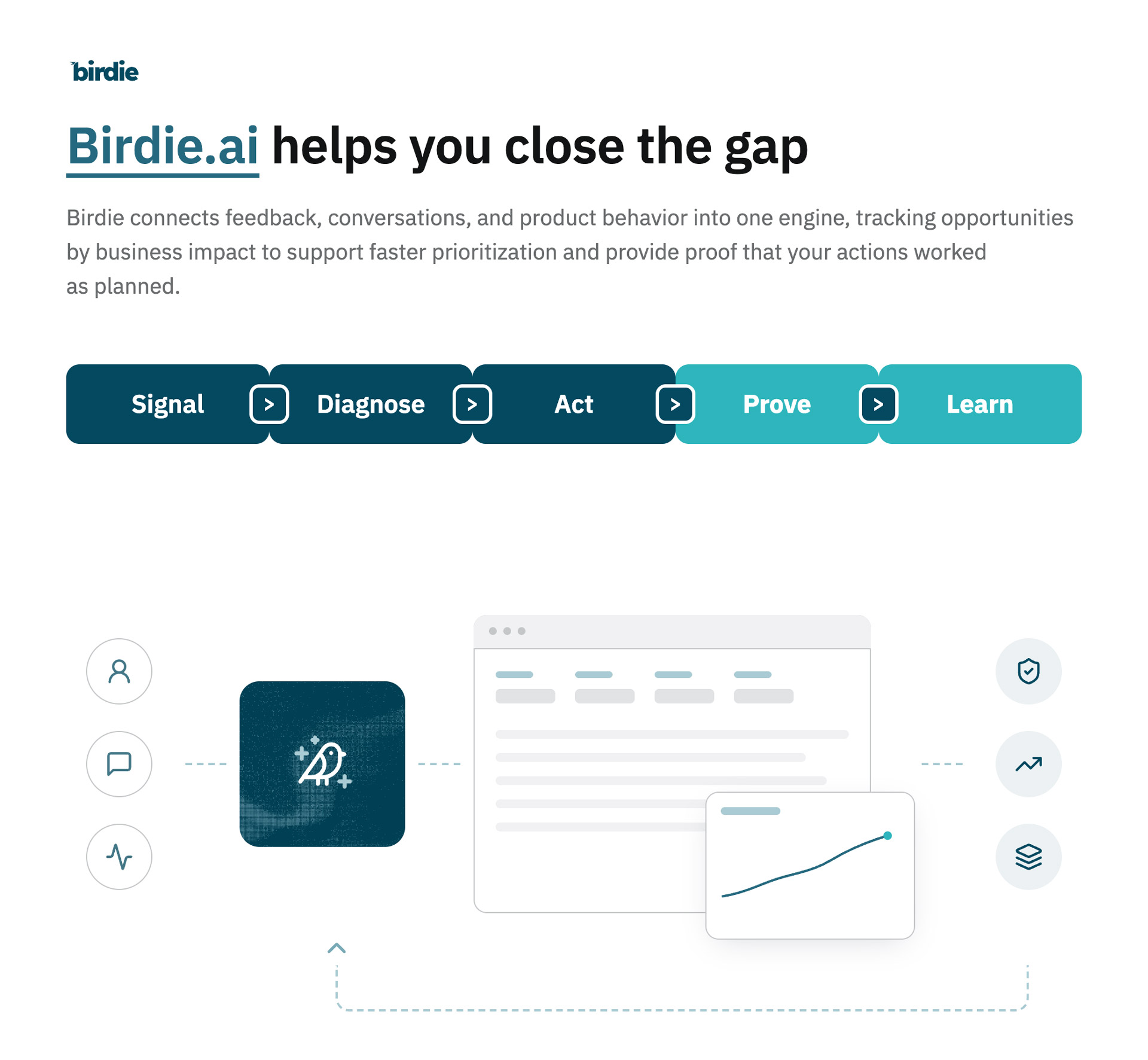
Para quem compra em serviços financeiros, isso é uma ponte utilizável entre CX, atendimento, digital, produto, operações e liderança. Sustenta exatamente aquilo que instituições menores e fintechs em crescimento acelerado precisam fazer especialmente bem: concentrar recurso limitado nos problemas que mais importam, agir com mais confiança e mostrar o valor que cada intervenção gerou. Se o seu programa de voz do cliente ainda termina num relatório, é essa a lacuna a fechar.
“Mas a gente já faz isso”
A maioria das instituições já tem dashboards, sistema de reclamação, programa de QA e tickets que são etiquetados e roteados. Se isso bastasse, o atrito descrito aqui já teria acabado. A diferença não é escutar mais. É se um signal vira, de forma confiável, uma causa raiz diagnosticada, uma ação com dono e uma prova medida, num prazo que ganha da paciência do cliente. Etiquetar um ticket fecha um ciclo para um cliente. Não corrige a causa raiz, não leva o padrão para o time que pode agir sobre ele e não confirma que a mudança funcionou. É essa a parte que ferramenta de relatório e de workflow deixa no chão, e é ali que o churn realmente mora.
Decida melhor, mais rápido
A pergunta para uma cooperativa de crédito, um banco ou uma fintech não é mais se ela está escutando. A maioria está. A pergunta é se ela consegue ver o que mudou, entender o que está por trás, decidir o que merece atenção, agir com dono claro e saber se a ação ajudou. É assim que se protege a confiança e se coloca recurso limitado onde ele vai importar mais. E é essa a base crível para IA: não mais uma ferramenta, e sim o contexto para tomar decisões sólidas e aprender com o resultado.
Agende uma demo para ver como a Birdie transforma customer signals em decisões que os seus times conseguem executar e comprovar.
Começar
Desbloqueie o poder da inteligência de CX com a nossa plataforma de Voz do Cliente e Gestão de Qualidade.

O que é experiência do cliente em serviços financeiros?

Experiência do cliente em serviços financeiros é como um banco, cooperativa de crédito ou fintech faz o cliente se sentir em interações do dia a dia como abertura de conta, atendimento, pagamentos, suporte, contestações e uso do digital. Cada vez menos ela é medida por uma única nota de NPS ou satisfação, e cada vez mais pela rapidez com que a instituição detecta um problema, decide o que importa, age com dono claro e prova que a correção funcionou. Em ambientes regulados, confiança e consistência pesam mais do que a nota de qualquer ponto de contato isolado.
Como melhorar a experiência do cliente em serviços financeiros?
Você melhora transformando customer signals em um ciclo de decisão: signal, diagnóstico, ação, prova, aprendizado. Isso significa conectar registros de ligações, chats, reclamações, analytics de produto e histórico de CRM, identificar a causa raiz e o segmento afetado, definir um dono claro e medir se a mudança reduziu abandono, recontatos ou churn. A disciplina é sair da escuta para a ação com dono e medição, rápido o bastante para que o cliente ainda não tenha ido embora.
Qual a diferença entre decision velocity e simplesmente ser mais rápido?
Ser mais rápido é velocidade pura, que pode espalhar uma decisão ruim tão fácil quanto uma boa, enquanto decision velocity é bom julgamento com rapidez: ter contexto suficiente para acertar e entregar antes que o cliente abandone ou saia. A diferença está no contexto: o time precisa entender o que mudou, quem foi afetado e quais trade-offs estão em jogo. Rápido e certo é o único alvo que vale; rápido ou certo é uma falsa escolha.
Como provar que uma mudança na experiência do cliente teve impacto no negócio?
Meça o antes e o depois no indicador que a mudança pretendia mover: abandono, taxa de recontato, qualidade da resolução, adoção no segmento afetado, custo de atendimento ou evasão. Trate o trabalho como inacabado até essa evidência existir, porque é a prova que diz se vale escalar a correção, investir mais nela ou parar. Atividade sem resultado medido acumula esforço, mas não aprendizado.
Ainda preciso de uma customer context layer se já tenho dashboards e sistema de reclamações?
Sim, porque dashboards e sistemas de reclamação mostram que as ligações subiram ou a satisfação caiu, mas não estabelecem a causa raiz, não dimensionam o impacto, não definem um dono nem confirmam que a correção funcionou. Etiquetar um ticket fecha o ciclo para um cliente; não leva o padrão para o time que pode resolvê-lo. É justamente nessa lacuna entre relatório e ação com dono e prova que o churn se esconde.
A IA pode tomar decisões de experiência do cliente sozinha em bancos?
A IA pode revelar padrões, classificar problemas e recomendar ações, mas num setor regulado quem decide o que precisa de revisão, onde a automação cabe e o que dispara escalonamento ainda são as pessoas. IA transparente significa conseguir rastrear por que uma recomendação foi feita e o que aconteceu depois que você agiu, não uma caixa-preta impossível de auditar. Usada assim, a IA melhora o atendimento sem enfraquecer confiança, qualidade ou responsabilidade.
Veja Birdie em ação.
Veja como o Birdie transforma sinais de clientes em decisões de retenção, expansão e adoção. 30 minutos. Demonstração ao vivo com resultados.