0
min read
February 3, 2026
How to Transform Your CX from a Cost Center to a Strategic Profit Engine
The $3.8 Trillion Problem No One's Talking About
Did you know? Companies delivering exceptional customer experiences generate 4-8% higher revenue growth than their competitors, according to Bain's report.
Yet here's the disconnect: Gartner reports that 70% of CX initiatives fail to deliver meaningful business outcomes. This gap between CX potential and actual business impact represents an estimated $3.8 trillion in unrealized value.
The question is: Why are so many companies failing to transform CX from cost center to profit engine?
In our recent masterclass, "From Cost Center to Profit Engine: A CX Leader's Blueprint," CX veteran Camila (Cami) Ferreira shared a transformative framework that's helping forward-thinking leaders break this pattern by repositioning CX as a strategic profit driver. It pairs well with our live session with Zack Hamilton on making smarter, faster CX decisions.
"Most CX teams speak a completely different language than their executive teams. Until you bridge that gap, you'll always be fighting for resources and recognition." Camila Ferreira, CX transformation expert with UberEats, SpotOn, Groupon
The Unspoken Pain Points: What's Preventing CX from Becoming a Profit Engine
The daily reality for CX leaders often looks like this:
- The Credibility Gap: "My executives ask for the ROI of every CX initiative, but my tools only measure CSAT and NPS."
- The Budget Battle: "We keep getting asked to do more with less because CX is seen as a place to cut costs when things get tight."
- The Translation Trap: "I know our work drives revenue, but I can't speak the language of finance to prove it."
- The Prioritization Paralysis: "Everything seems important, but we're spread too thin to make meaningful impact anywhere."
These challenges aren't isolated incidents. 54% of CX leaders struggle to connect their metrics to business outcomes, while more face recurring budget challenges because they can't adequately demonstrate ROI.
This creates four critical problems that prevent transforming CX from cost center to profit engine:
- The Measurement Disconnect: Your team tracks satisfaction while executives track finances
- The Resource Competition: Your initiatives compete poorly against projects with tangible ROI
- The Strategic Misalignment: Your CX work develops separately from broader business strategy
- The Technology Gap: You're missing the transformative potential of AI-powered solutions that could scale your impact
The Four-Pillar Framework: Your Blueprint for CX Transformation
The masterclass outlined a comprehensive approach for repositioning CX from a cost center to a strategic profit engine, let's explore each pillar in detail:

Pillar 1: Master the Language of Business Value
As Cami explained in the session, think of this as learning to speak a new language: the language of business impact. Instead of just reporting that NPS increased by 10 points, explain what this means in financial terms.
Try this approach instead:
- "Our 10-point NPS improvement typically generates a 3% reduction in churn, protecting approximately $2.1M in annual recurring revenue."
- "This checkout friction point costs us an estimated $430,000 monthly in abandoned purchases."
The proof? Harvard Business Review research shows that businesses that successfully link CX metrics to financial outcomes are 2.5x more likely to gain market share against competitors.
Pillar 2: Develop Financial Fluency
Understanding your company's profit and loss statement isn't optional. It's essential for effective CX leadership. The P&L statement tells the story of your business in financial terms. By understanding this story, you can position CX initiatives precisely where they create the most significant impact.
Here's your financial fluency roadmap:
- Learn which P&L line items your CX initiatives impact
- Partner with finance to understand their models
- Create a timeline showing when CX investments will yield returns
Pillar 3: Position CX as a Fundamental Business Driver
"Customer experience isn't a nice-to-have function. It's the ultimate competitive differentiator in today's market," Jen Burton, CX Advisor, Zendesk
To look at CX as a critical capability that directly influences purchasing decisions, loyalty, and advocacy is a must.
Align CX initiatives directly with your company's strategic priorities:
- For growth-focused companies: Show how CX drives acquisition and expansion
- For efficiency-focused organizations: Demonstrate how CX reduces operational costs
- For market leaders: Illustrate how superior CX creates sustainable competitive advantages
Pillar 4: Leverage Data and AI to Focus on "Needle Movers"
In today's resource-constrained environment, you can't improve everything simultaneously. The key is identifying and prioritizing the elements that most significantly influence business outcomes.
This is where AI becomes your advantage:
- Process vast amounts of feedback data to identify patterns humans might miss
- Predict the business impact of addressing specific pain points
- Automate routine tasks to focus human talent on high-value interactions
The results speak for themselves: According to Qualtrics XM Institute, companies that prioritize CX investments based on business impact achieve 3x greater ROI.
Real-World Tools: Making the Framework Actionable
The most valuable aspect of the masterclass was its focus on practical application. Cami shared several frameworks to operationalize these principles.
The Impact-Effort Matrix
Here's a simple but powerful framework to prioritize initiatives that we thought would add value here:
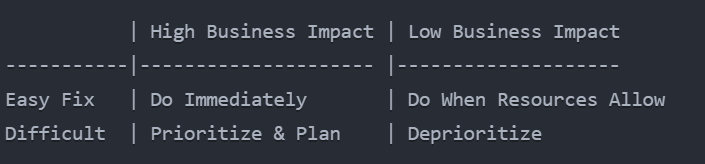
Pro tip: Define "impact" in explicit financial terms, not experiential ones.
The Executive Communication Template
When presenting CX initiatives to leadership, use this structure:
- Business objective addressed: Which strategic priority or financial metric will this impact?
- Current state analysis: Quantify the financial impact of the current situation
- Proposed solution: Explain in business terms, not CX jargon
- Expected outcome: Provide specific financial projections
- Resource requirements: Detail the investment needed
- Timeline and measurement: Specify when results will be visible
The CX Pro's Path Forward: Where Do We Go From Here?
As the masterclass concluded, both Cami and Jen emphasized that this evolution isn't just about securing more budget. It's about fundamentally repositioning CX as a strategic discipline essential to business success.
For CX professionals ready to make this transition, consider these next steps:
Leverage AI for Scale: Use intelligent systems like Birdie to process feedback data at scale, identify patterns humans might miss, and quantify the business impact of customer issues.The leaders who succeed will be those who master both customer experience excellence and the language of business impact.
Conduct a CX-Business Alignment Audit: Map each of your current CX metrics to specific business outcomes. Identify and address gaps.
Build Your Financial Fluency: Partner with Finance to understand how CX impacts your company's specific P&L.
Develop an Executive Dashboard: Create a simple visualization showing direct relationships between CX metrics and business outcomes.
Implement Impact-Based Prioritization: Adopt a systematic framework for evaluating and prioritizing CX initiatives based on business impact.
The leaders who succeed in this new landscape will be those who master not just customer experience tactics, but the language and metrics of business impact. They'll be the ones who can confidently demonstrate how every dollar invested in customer experience drives measurable returns for the organization.
The insights from our masterclass provide a roadmap for this evolution. The rest is up to you. The journey starts with a single conversation, perhaps with your finance team, perhaps with your leadership, or perhaps with partners who can help you accelerate this transformation.
If you liked this blog, you would definitely like the Birdie Masterclass that was the genesis behind this. Below is the complete Masterclass. Enjoy!
https://www.youtube.com/watch?v=Kme3qeYDHOw
Want to see how Birdie helps leading companies use AI-powered feedback analytics to transform CX from a cost center to a profit engine? Request a demo.

Pat Osorio

Get started
Unlock the power of CX intelligence with our Customer Intelligence and Frontline Intelligence platform.
What does it mean to turn CX from a cost center into a profit engine?

Turning CX from a cost center into a profit engine means repositioning customer experience as work that demonstrably drives revenue, retention, and competitive advantage rather than a support expense to cut when budgets tighten. It requires connecting CX metrics to financial outcomes so leadership sees returns, not just satisfaction scores. The shift is as much about language and proof as it is about the work itself.
How do you turn CX into a profit engine?
Use a four-pillar approach: speak the language of business value by translating metrics into dollars, build financial fluency by learning which P&L lines your work affects, position CX against the company's strategic priorities, and use AI to focus on the highest-impact issues. For example, reframe 'NPS rose 10 points' as 'a 10-point NPS gain typically cuts churn 3%, protecting about $2.1M in recurring revenue'. Then prioritize with an impact-effort matrix where impact is defined in financial, not experiential, terms.
What's the difference between measuring CSAT/NPS and measuring CX business impact?
CSAT and NPS measure how satisfied customers feel, while CX business impact measures what that satisfaction is worth in revenue, churn, and cost to serve. Executives track finances, so a team reporting only satisfaction scores speaks a different language than the boardroom and struggles for budget. Bridging that gap is the difference between fighting for resources and being funded as a driver.
Does linking CX to financial outcomes actually work?
Yes, and the figures back it: businesses that link CX metrics to financial outcomes are 2.5x more likely to gain market share (Harvard Business Review), and companies that prioritize CX investments by business impact see 3x greater ROI (Qualtrics XM Institute). Bain also found companies delivering exceptional experiences grow revenue 4-8% faster than competitors. The pattern is consistent: the financial framing is what unlocks both results and recognition.
Does CX still get cut when it's seen as a cost center?
It does, and that is exactly the pattern to break: 70% of CX initiatives fail to deliver meaningful business outcomes (Gartner), which keeps CX first in line for budget cuts. The fix is not more CSAT reporting but proving, in P&L terms, what CX protects and generates, because 54% of CX leaders struggle to connect their metrics to business outcomes. Once you can show the dollar impact, CX competes as an investment instead of an expense.
Can AI alone transform CX into a profit engine?
No, AI accelerates the work by processing feedback at scale, spotting patterns humans miss, and quantifying the impact of specific issues, but it does not replace the leadership skills the transformation depends on. You still need financial fluency, executive communication, and alignment to company strategy to make the case stick. AI focuses effort on the needle-movers; people turn that focus into funded action.
See Birdie in action.
See how Birdie turns customer signals into retention, expansion, and adoption decisions. 30 minutes. Live demo with outcomes.